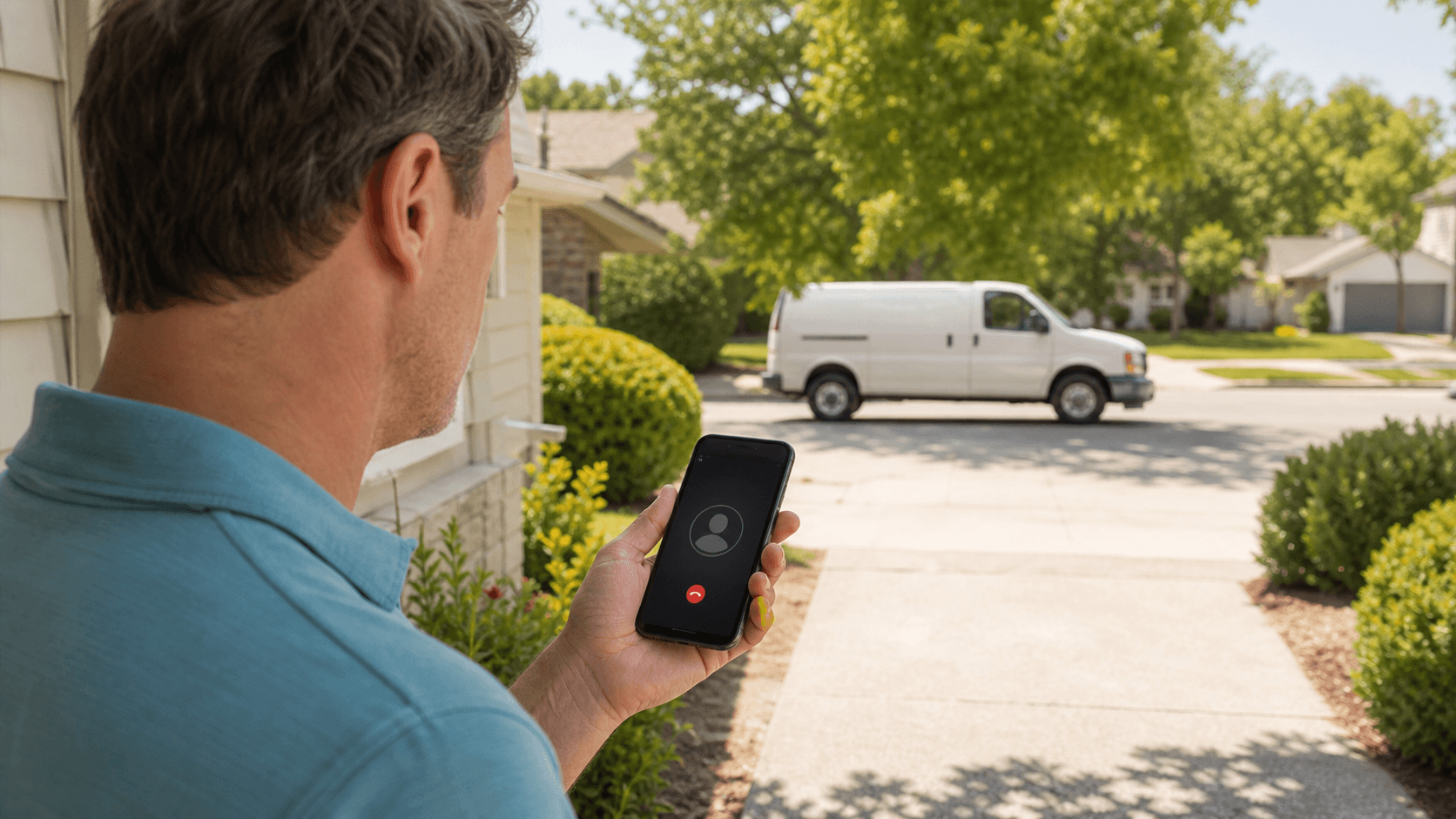
A homeowner with a dead furnace is not running a careful vendor evaluation. They are anxious, they are in a hurry, and they are deciding — fast — whether you are the company that is going to fix this.
That decision happens in the first sixty seconds. Win those, and the job is mostly booked. Lose them, and the best pricing in town will not save you.
Every ring is a reason to hang up
The single biggest factor in whether a call converts is how fast it is answered. Each extra ring raises the caller's anxiety and their temptation to try the next company. A large share of callers abandon within the first twenty seconds.
Picking up in two rings is not just polite — it is the first proof that you are reliable. If you answer fast when they are stressed, they believe you will show up fast when they are stranded.
The greeting sets the entire tone
The first sentence does a lot of work. A calm, warm, branded greeting tells the caller they reached a real, competent business — not a side hustle, not a dead end. Tone communicates trust before any information is exchanged.
Fumble the open — a flustered hello, background noise, 'can you hold' — and you spend the rest of the call climbing out of a hole.
Callers decide if they trust you from your tone long before they hear your price.
What has to happen inside 60 seconds
A booked job is not luck; it is a sequence. In the first minute a great front line moves briskly through a short, reassuring checklist without ever sounding like a form.
- Greet warmly and say the business name, so they know they reached the right place.
- Capture the name and a callback number first — before anything can drop the call.
- Identify the problem and gauge urgency: no heat, no cooling, a leak, a routine tune-up.
- Confirm the service address is in the service area.
- Set a clear expectation: an arrival window, a dispatch fee, and what happens next.
Reassurance plus speed equals trust
Underneath the logistics, the caller is asking one emotional question: am I going to be okay? Speed answers it on a gut level, and a calm, organized response answers it on a rational one.
Give both in the first minute and the homeowner stops shopping. They are no longer comparing companies; they are relieved to have found one.
The same flawless first minute, every time
This is where an AI agent shines, because the first sixty seconds is a repeatable, high-stakes routine — exactly what software is good at. It answers instantly, greets in your brand voice, and never gets flustered by the fourth simultaneous call.
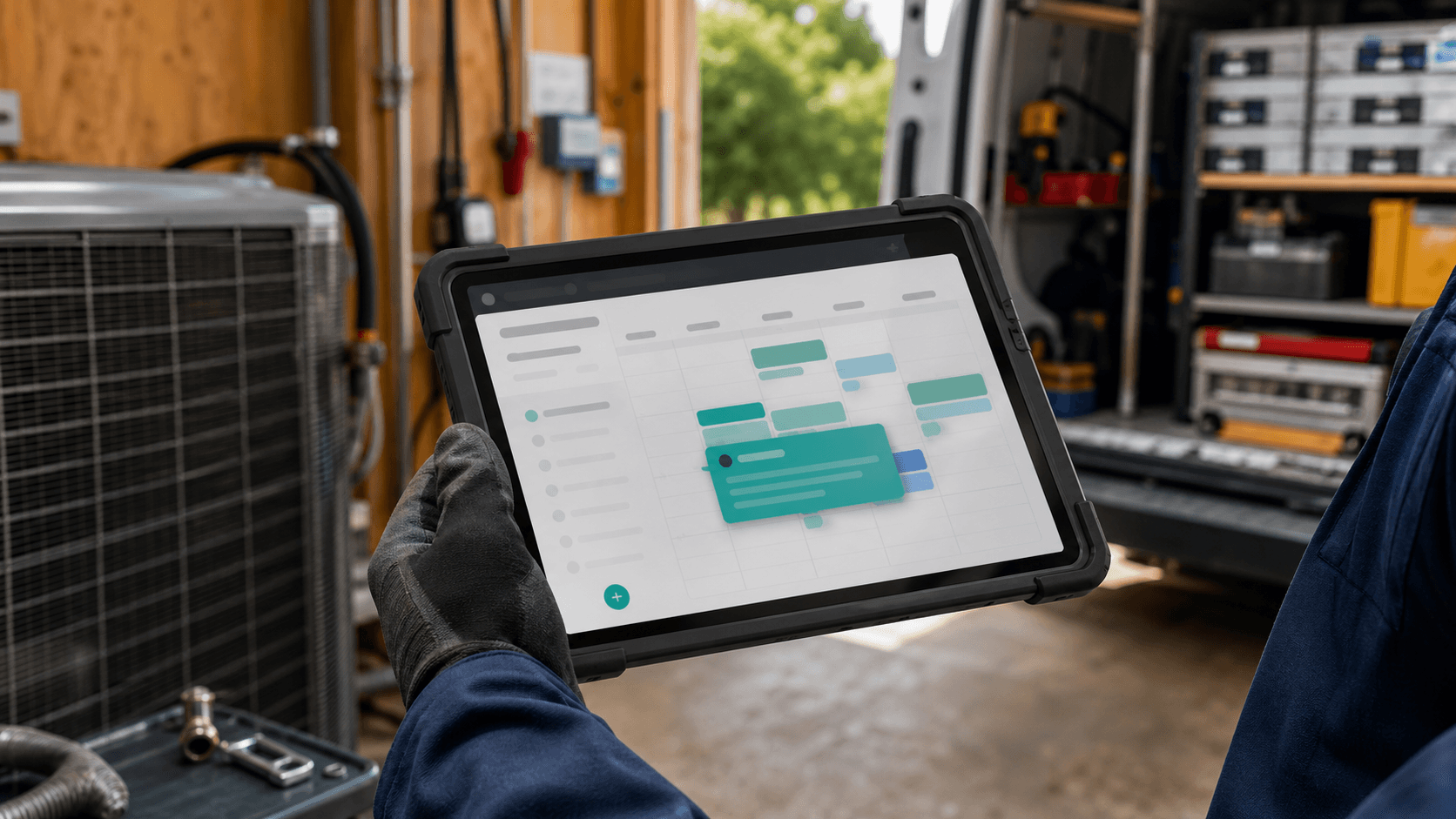
It runs the checklist every time, reads your live calendar, and books the slot on the spot — or, for a true emergency, pages your on-call tech immediately. Then it logs the entire conversation so the handoff is clean.
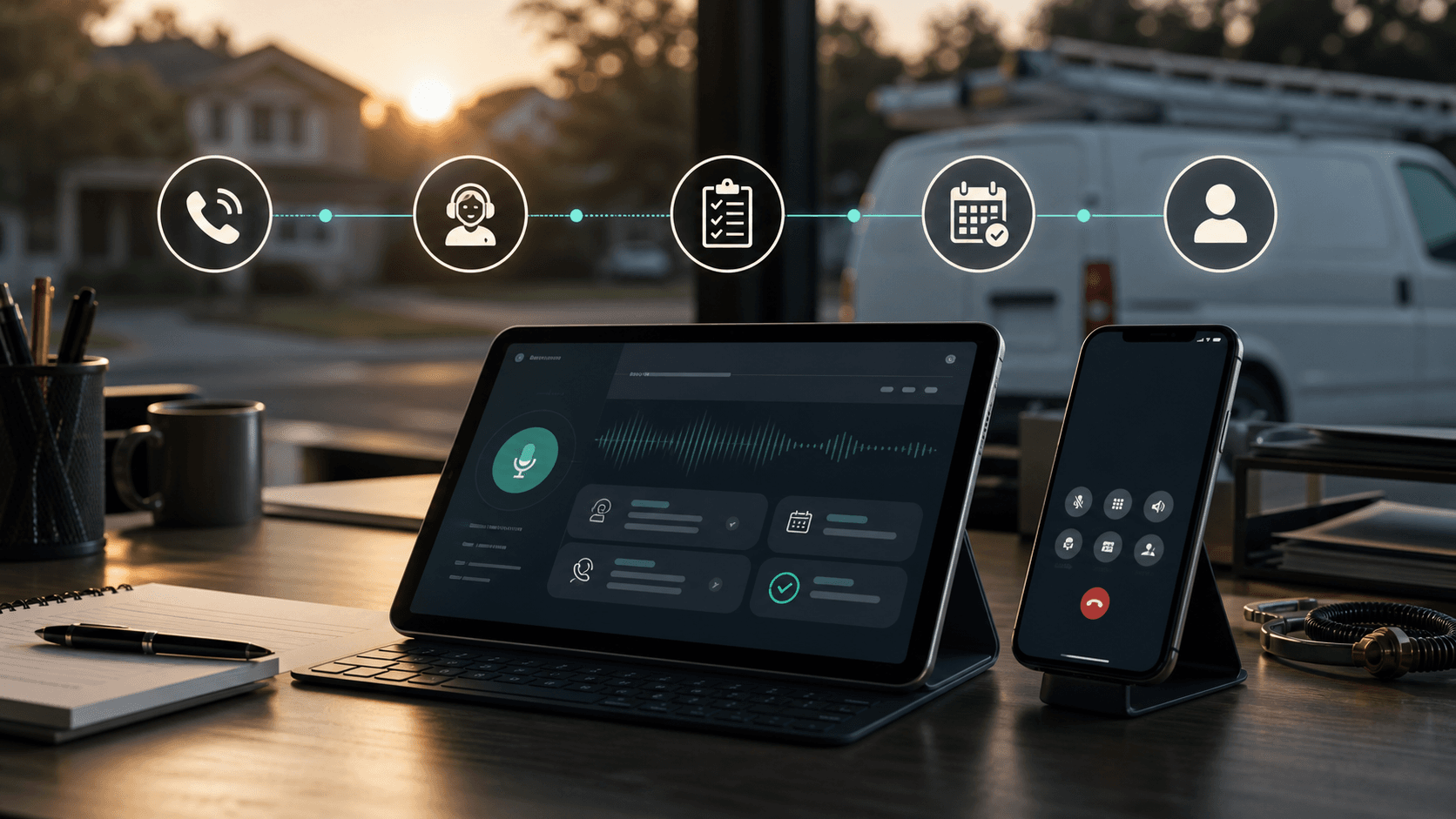
Booked, or warm-handed to a human
Not every call should end with software. The win is that the routine majority get booked automatically, while the genuine emergencies and edge cases are escalated to a person with full context already captured.
Either way, the caller's first minute felt fast, calm, and competent — and that is the minute that decided whether you got the job.
The first sixty seconds is the whole sale in miniature: answer fast, sound calm, capture the essentials, and set a clear expectation. Do it on every call — not just the ones you happen to catch — and your booking rate stops depending on who is near the phone.
See it answer your phones.
Book a 15-minute demo, or call the AI receptionist yourself and hear exactly how it books a job.